Before choosing a telescope, look at the lights. A lodging entrance, a road, a parking area and a path each bring a decision about what should be illuminated. A place can advertise darkness while steadily adding the infrastructure that makes it harder to preserve.
The question is not whether residents and visitors should move safely at night. It is what lighting serves those needs, where it falls and when it operates. That practical conversation often matters more to a dark-sky destination than the dramatic photograph used to promote it.
DarkSky International and the Illuminating Engineering Society’s five lighting principles combine purpose, targeting, level, control and color. Their approach is to provide appropriate light while limiting unnecessary spill and use. Treating a single warm-colored lamp as a complete solution misses the combined design.
This makes dark-sky tourism an unusually clear test of a travel industry’s relationship with its resource. Visitors come because a place retains a condition that development can erode. The destination needs to make a living from attention while resisting the assumption that more attention should always mean more illumination, construction and traffic.
The night already has inhabitants
Darkness is easy to describe as an absence. For a tourism business it can appear to be unused space waiting for an evening program. For the landscape and its residents, the night is already occupied by activities and relationships that do not need a ticket.
The US National Park Service treats natural lightscapes as a resource, connecting them with ecology, culture, visitor experience and astronomy. Its policy includes cooperation with neighboring communities because light does not stop at a park boundary. Protecting a viewing location requires attention to the wider setting.
The agency’s discussion of light sources also distinguishes local effects, including spill, from the wider appearance of the sky. A bright fixture can affect an immediate neighbor even if a distant sky measurement seems acceptable. A successful program should recognize both the view upward and the conditions at ground level.
Residents have legitimate uses of that ground. Work shifts, deliveries, farming and ordinary movement continue after a visitor decides it is time for silence. Conservation needs a negotiated lighting and access arrangement rather than an expectation that the community becomes a backdrop for someone else’s experience.
That negotiation can be constructive. A better-directed light can serve a path while reducing spill beyond it. Controls can match use to time. The appropriate design follows the task and setting, with relevant professional requirements, rather than an instruction to extinguish everything indiscriminately.
Ecological claims need their own specificity. Different species and habitats respond to different conditions. A project reducing skyglow can be valuable without claiming that one lighting change proves every ecological benefit. Monitoring and appropriate local evidence can help identify which changes matter most in the particular place.
The wider objective is a functioning nighttime landscape. Stars are one reason people notice its value, not the only reason the condition deserves care.
A designation is a commitment with paperwork
Certification can help a community organize goals and signal that conservation work has occurred. It also invites a common misunderstanding: that a designation permanently settles the condition of a place, independently of what happens afterward.
DarkSky’s annual-report guidance, updated in September 2026, requires certified places to report on conditions and activities as part of continuing accreditation. Topics include sky monitoring, lighting compliance, outreach and future threats. That is a continuing relationship, not simply a badge awarded once and retained without further work.
The distinction matters when a business uses a place’s designation in marketing. The certification has a defined scope and category. It should not be stretched into a guarantee about every private facility nearby or the exact experience on every night. The visitor needs to understand which place and program the claim describes.
Different designations should also remain distinct. UNESCO’s astronomy and World Heritage initiative explains how dark-sky values can contribute to the significance of a place while not, by themselves, creating a specific World Heritage property category. A Dark Sky Place and a UNESCO World Heritage inscription are different recognitions.
The strongest public account would explain the work behind the status. What lighting has changed? How is the sky observed? Who responds when new development creates pressure? Those questions reveal whether a designation supports a living conservation program rather than merely furnishing a logo for a brochure.
The community needs capacity for that work. Monitoring, public education, coordination and planning take people and resources. Tourism revenue can help justify investment, but a program should identify how the benefit reaches the organization doing the conservation. A general rise in visitor spending does not automatically pay the person responsible for annual reports or local lighting advice.
The journey to the stars has a footprint on the ground
An isolated viewing site can acquire a busy arrival period. Cars bring headlights, parking needs and movements after dark. Visitors who have traveled a long way may expect facilities beyond those a small site can support. The destination needs to plan the ground-level visit alongside the sky.
DarkSky’s principles of responsible astrotourism address the relationship between tourism, conservation and communities. Their premise recognizes the opportunity for tourism to support protection and the possibility that growth creates new pressure. An observatory session is part of a destination, rather than an activity detached from it.
Zion makes the ground-level choices tangible in its stargazing guidance. The park names the Pa’rus Trail and an ADA-accessible Human History Museum patio among viewing options, while warning that Lava Point Overlook closes seasonally with snow. It also distinguishes those approaches from destinations on Zion Canyon Scenic Drive, where shuttle arrangements constrain access for much of the year. A dark patch on a map cannot stand in for an arrival and return plan.
Visitor instructions can reduce avoidable disruption. The Park Service’s stargazing guidance explains how bright screens, white lights and vehicle headlights affect dark adaptation, and recommends considerate lighting. Such advice should be communicated before the group gathers, when people still have a chance to prepare.
Access remains important. A place should describe the path, surface, facilities and conditions clearly rather than use remoteness as a substitute for information. Someone planning a visit needs to know whether it fits their requirements. An evocative statement about wilderness does not answer where a person can sit or whether a toilet is usable.
The climate account should include the journey too. A destination cannot establish a low-impact holiday simply because the viewing activity itself uses little light. Travel, accommodation and other activities belong to a wider assessment. The environmental value of dark-sky conservation is real without being asked to erase every other impact of tourism.
Longer stays, suitable transport arrangements and carefully managed programs can be investigated as ways to improve the destination’s operation. Their effects need evidence suited to the place. The appropriate ambition is a credible conservation-and-visitor system, not a competition for the greatest number of arrivals after sunset.
The sky refuses a guarantee
Cloud, the Moon, season and atmospheric conditions affect what a visitor can see. A site can be well managed and still provide a night different from the one in its advertising image. That variability should shape the product and the promise.
Zion National Park’s stargazing information explains, for example, that moonlight can obscure fainter features. This is a practical limit on an expectation, not a failure of the landscape. A bright Moon can support a different kind of observing experience without delivering the same Milky Way view.
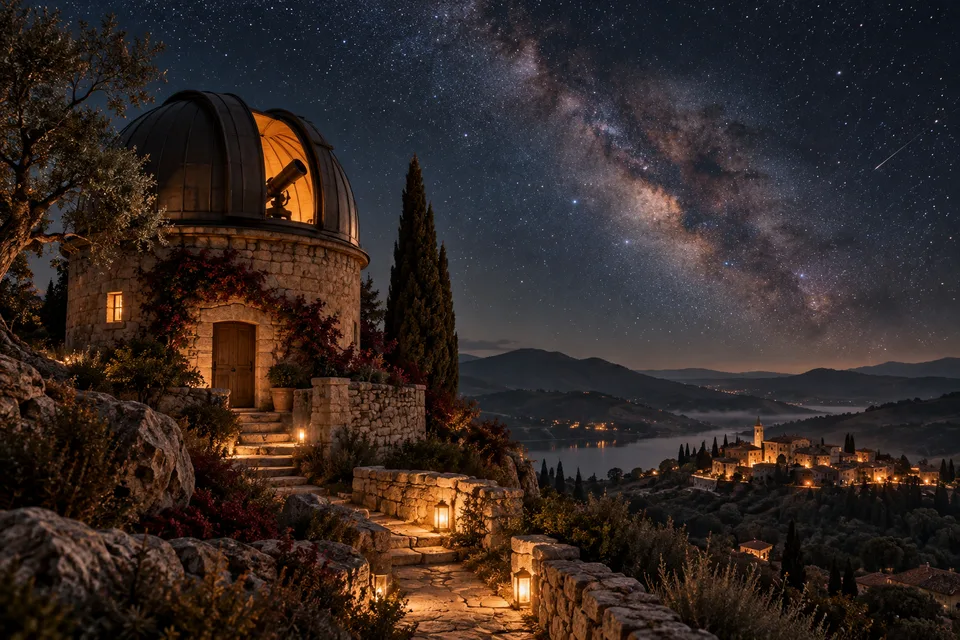
A photograph adds another layer. Exposure, equipment and processing can reveal an appearance unlike a person’s unaided view. This article’s cover is an AI illustration, as its caption states, rather than a record of a destination’s sky. A travel offer should make that distinction clear wherever it uses such imagery.
An honest program can offer more than the chance to replicate a photograph. It can explain the sky, equipment and conservation setting, with a suitable alternative when conditions change. The guide’s knowledge and the destination’s care can remain valuable even if the most dramatic view is unavailable.
That also makes the commercial arrangement clearer. Visitors should understand what is included and how unsuitable conditions are handled. A business built around a variable natural experience needs a fair policy and a way to communicate it, rather than treat every disappointment as the visitor’s misunderstanding.
The uncertainty can even improve the encounter. People learn that the night has conditions and rhythms rather than behaving like an attraction switched on for their arrival. The sky becomes something to observe attentively, not a screen expected to display the same image every evening.
Knowledge belongs to people as well as places
Astronomy tourism often pairs scientific explanation with stories about the sky. Those stories have histories and communities. A responsible program should know whose knowledge it presents and under what permission, rather than assemble a generic collection of “ancient beliefs” for entertainment.
The UNESCO–IAU thematic study of astronomical heritage distinguishes physical sites, practices and intangible knowledge connected with Indigenous astronomy. That breadth is a reminder that astronomical heritage can include navigation, calendars and oral traditions, with relationships extending beyond an observing instrument.
For a tourism program, the implication is participation and attribution. Communities should have a say in how their knowledge and places are represented. Some material may not be appropriate for public retelling. The absence of a visible monument does not make a cultural landscape available for unrestricted interpretation by an outside business.
Benefits should be considered with the same care. Local guiding, accommodation and services can provide income, but the distribution depends on ownership and contracts. A rise in visitor numbers is not a complete account of what residents receive or what burdens they carry.
The best programs can connect conservation with education and local opportunity while respecting these boundaries. They need neither invent a timeless local voice nor promise that tourism solves every rural economic problem. Specific people can explain specific knowledge and work, with their role and contribution visible.
The public invitation should also make room for people without specialist equipment. A first encounter with the night does not have to begin with an expensive purchase. Programs can explain what is visible without instruments and what a guided session adds, so the equipment becomes a tool rather than an entry requirement. Pricing and access then become part of education: who can participate, what support is available and how local residents can share the experience. A destination should be careful not to turn a resource its community protects into something only visiting customers feel entitled to enjoy.
Protect the condition that made the invitation possible
A destination worthy of its dark-sky claim would know its lighting, maintain its conservation commitments and organize the visitor’s arrival and departure. It would communicate realistic viewing conditions and provide a clear account of access. It would include the people who live with the resulting night.
The reward is more durable than a spectacular image. Tourism can help people recognize a resource they might otherwise overlook and provide reasons to maintain it. The program succeeds when that attention strengthens the place’s ability to remain dark, usable and inhabited on its own terms.
The night never was empty. The most valuable invitation lets visitors discover how much was already there.
Sources & context
This article draws on the sources linked in the text. Analysis and illustrative scenarios are identified separately from reported findings.
- five lighting principles
- treats natural lightscapes as a resource
- discussion of light sources
- annual-report guidance, updated in September 2026
- astronomy and World Heritage initiative
- principles of responsible astrotourism
- stargazing information
- stargazing guidance
- UNESCO–IAU thematic study of astronomical heritage